India Mandates Registered Caller Name Display on 4G and Newer Networks From November 1
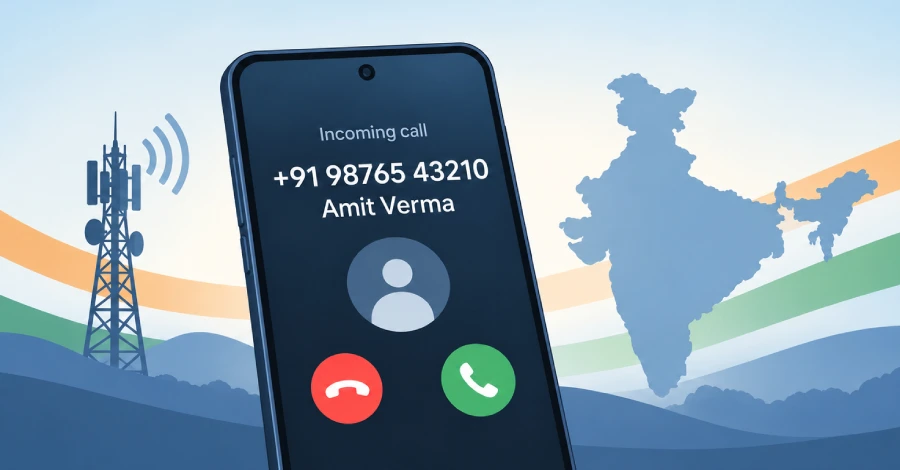
The Indian government has directed telecom service providers (TSPs) in the country to mandatorily display callers' registered names along with their numbers for incoming calls starting November 1, 2026, in an effort to help people identify calls from unknown numbers and tackle spam or fraudulent calls.
The Indian government has directed telecom service providers (TSPs) in the country to mandatorily display callers' registered names along with their numbers for incoming calls starting November 1, 2026, in an effort to help people identify calls from unknown numbers and tackle spam or fraudulent calls.
The caller ID system is mainly targeted at wireless terrestrial networks established using 4G and higher generation technologies.
Under the new guidelines, every time a user receives a call, the first field will display the caller's number, as is the existing practice.
The second field will contain the name of the calling user in the following order of preference - Telecom operators are also expected to provide a Calling Line Identification Restriction (CLIR) facility, as part of which users can choose to hide their caller identity when making calls.
Furthermore, the Ministry of Communications is urging TSPs to adopt a secure-by-design approach when implementing the system and ensure the security of communications by - Users with business connections or bulk connections can opt for a "preferred name" that replaces the calling name identity.
To that end, the Department of Telecommunications has issued a circular urging service providers to implement the Calling Name Presentation (CNAP) service.
The circular noted that a CNAP rollout for 2G and 3G networks, as well as public switched telephone networks (PSTNs), will be taken up separately after examination.
What happened
The Indian government has directed telecom service providers (TSPs) in the country to mandatorily display callers' registered names along with their numbers for incoming calls starting November 1, 2026, in an effort to help people identify calls from unknown numbers and tackle spam or fraudulent calls.
The caller ID system is mainly targeted at wireless terrestrial networks established using 4G and higher generation technologies.
What changed
Under the new guidelines, every time a user receives a call, the first field will display the caller's number, as is the existing practice.
Who is affected
The second field will contain the name of the calling user in the following order of preference - Telecom operators are also expected to provide a Calling Line Identification Restriction (CLIR) facility, as part of which users can choose to hide their caller identity when making calls.
Furthermore, the Ministry of Communications is urging TSPs to adopt a secure-by-design approach when implementing the system and ensure the security of communications by - Users with business connections or bulk connections can opt for a "preferred name" that replaces the calling name identity.
What remains unknown
The Indian government has directed telecom service providers (TSPs) in the country to mandatorily display callers' registered names along with their numbers for incoming calls starting November 1, 2026, in an effort to help people identify calls from unknown numbers and tackle spam or fraudulent calls.
Attribution
The Hacker News: The Indian government has directed telecom service providers (TSPs) in the country to mandatorily display callers' registered names along with their numbers for incoming calls starting November 1, 2026, in an effort to help people identify calls from unknown numbers and tackle spam or fraudulent calls.