Product showcase: Norton helps Claude users uncover the telltale signs of fraud
Norton has integrated its AI-powered scam detection into the Claude chatbot, enabling users to assess potential fraud in communications.
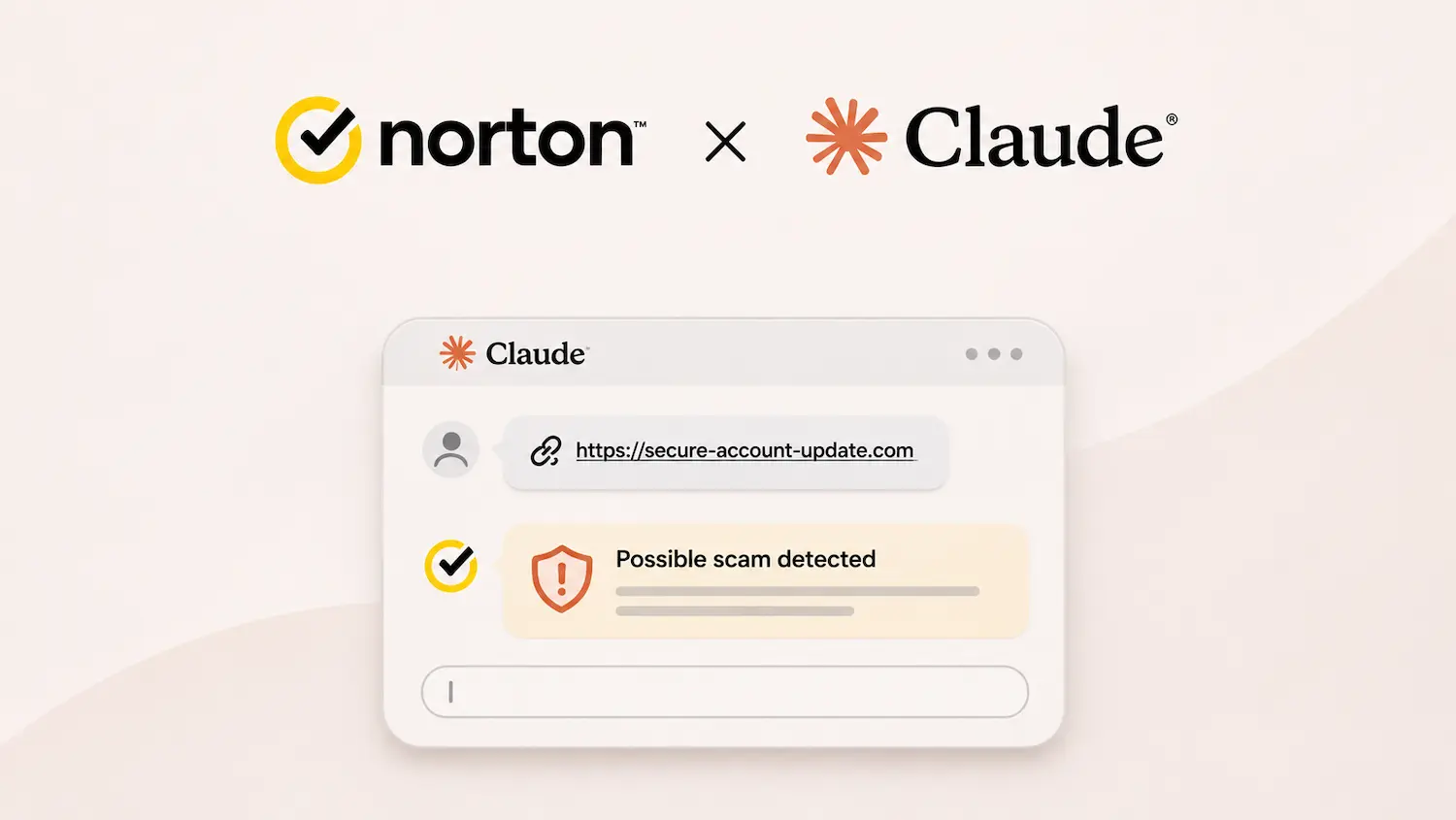
Norton has introduced a connector for the Claude chatbot that incorporates its Genie AI-powered scam detection capabilities. This integration allows users to analyze suspicious emails, text messages, screenshots, and links for potential fraud without needing a separate Norton account.
The Norton connector for Claude provides three main tools for users. The first tool checks links, messages, emails, and phone numbers for scams. The second offers guidance on cybersecurity threats, incident response recommendations, and safety education. The third tool provides support for Norton products, including troubleshooting and setup assistance. This integration aims to enhance users' ability to identify and respond to fraudulent communications effectively.
Users can submit various types of suspicious content for analysis. For instance, one test involved a fraudulent text message in Croatian that claimed to be from the Ministry of the Interior, threatening consequences for an unpaid speeding fine. After sharing a screenshot of this message with Claude, the Norton connector classified it as an extortion scam with high confidence. The analysis provided a detailed explanation of the fraud indicators, including government impersonation and escalating urgency, along with recommendations to avoid engagement.
The technology behind the Norton connector leverages artificial intelligence to analyze and classify potential scams. Users can interact with the Claude chatbot, submitting examples of communications they suspect may be fraudulent. The AI processes the input, assesses various risk factors, and delivers a classification along with an explanation of the reasoning. This approach helps users understand the tactics employed by scammers and empowers them to make informed decisions.
The integration affects users of the Claude chatbot, particularly those concerned about cybersecurity and fraud. By providing a seamless way to analyze communications, it aims to increase awareness and understanding of common scams. The tool's effectiveness in identifying various types of fraud, from phishing attempts to legitimate offers, highlights its potential utility for a broad audience.
The timeline of events surrounding this integration is not specified in the available information. However, the introduction of the Norton connector appears to be a recent development aimed at enhancing user experience and safety in online communications.
Norton has not publicly disclosed further details about the development process or the underlying technology of the connector. The company's focus seems to be on providing users with immediate access to scam detection capabilities through a familiar interface, making it easier for individuals to protect themselves from fraud.
Unknowns surrounding this integration include the long-term effectiveness of the AI in detecting evolving scam tactics and whether additional features will be added in the future. Users may also wonder how frequently the AI's training data will be updated to keep pace with new fraud schemes.
The long-term effectiveness of the AI in detecting evolving scam tactics is unclear.
It is unknown if additional features will be added in the future.
Details on how frequently the AI's training data will be updated are not provided.
What it meansNorton has integrated its AI-powered scam detection into the Claude chatbot, enhancing users' ability to identify fraudulent communications.
Ask your IT team this weekHow can we integrate similar scam detection tools into our communication platforms?What training do our teams need to recognize and respond to potential scams?
DecisionThe IT team will evaluate the integration of scam detection tools into existing systems, and security will check the implementation.