Credential Remediation Is Slow When You Don’t Know What Will Break
Credential remediation processes often stall due to lack of context about secrets, leading to prolonged exposure risks.
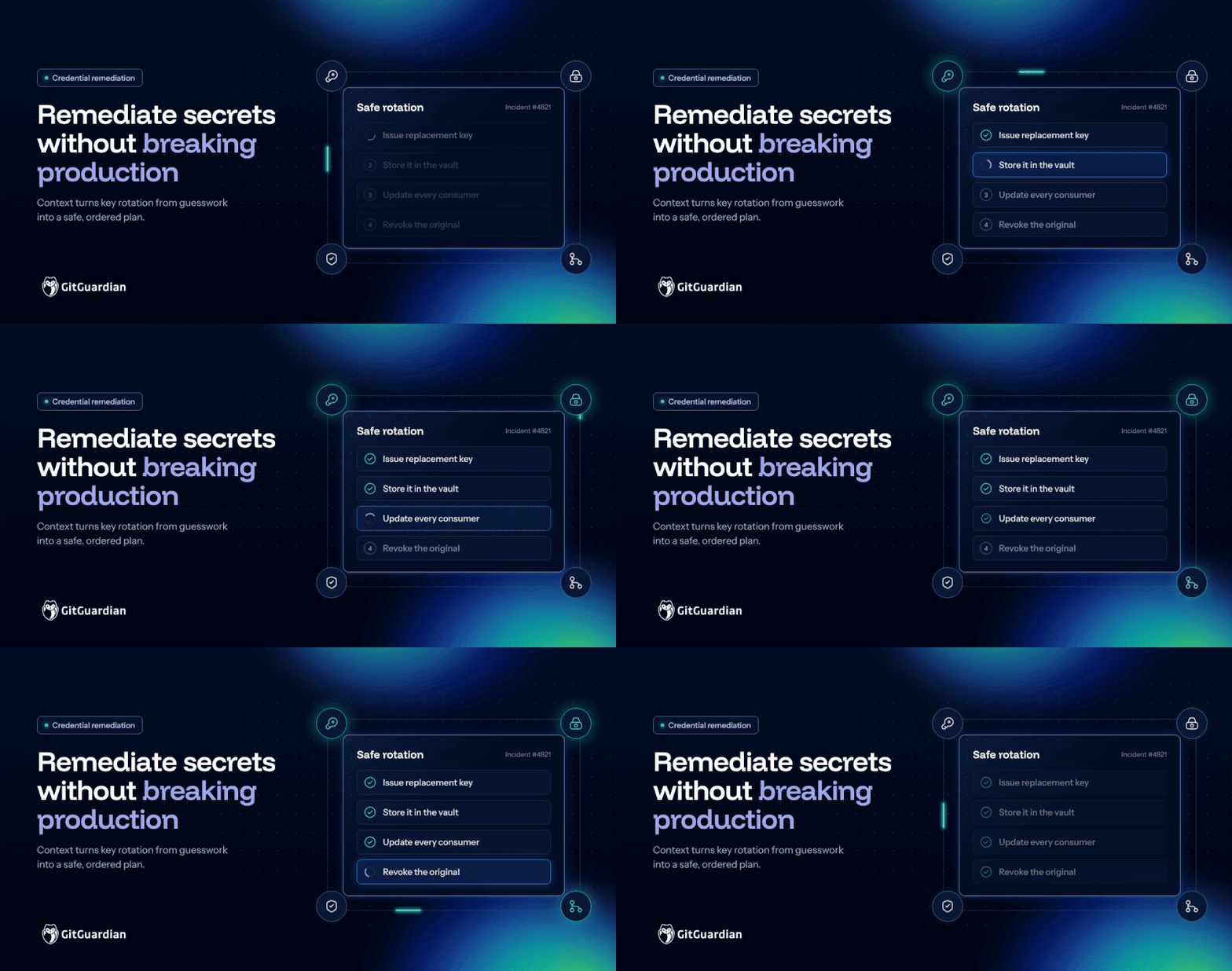
GitGuardian highlighted that many organizations struggle with credential remediation because they lack the necessary context to understand the risks associated with secrets. This challenge can lead to delays in rotating or revoking compromised keys, increasing the risk of abuse.
Every modern enterprise relies on credentials to securely connect humans, systems, and AI to data and services. GitGuardian provides solutions that focus on three key areas: Detect, Remediate, and Prevent. While detection is crucial, remediation is where many security programs falter. Without understanding the context of each credential, teams often hesitate to take action, which can lead to significant delays in addressing potential security issues.
The core issue arises from the difficulty in assessing the risks associated with revoking a credential. Security teams need to understand which systems depend on each secret and the potential impact of revocation. This lack of insight can create a state of decision paralysis, where teams are unsure whether to rotate or revoke credentials, fearing the consequences of breaking production systems. GitGuardian’s research indicates that 64% of valid secrets discovered in 2022 were still in use four years later, highlighting the commonality of this issue.
Credential remediation involves identifying and addressing leaked secrets, which can be tied to specific integrations within an organization's systems. Each leak requires a tailored approach to remediation, and the process can be complex. Security teams often lack the authority or knowledge needed to fix issues without risking further complications, leading to time-consuming investigations to determine the potential fallout of revoking a credential.
When a security engineer discovers an exposed credential, they may recognize its validity and potential danger, but they typically do not know which services will be affected by its revocation. Developers, who have the knowledge of where and why a key is used, are often preoccupied with other tasks, making it challenging to address security alerts promptly. This disconnect can lead to remediation requests becoming lost in the backlog, further delaying necessary actions.
As organizations grow, finding the right personnel to answer critical questions about credential dependencies becomes increasingly difficult. Different teams, such as application security, identity and access management, and platform engineering, each have their perspectives on credential use, but they often lack communication and coordination. This siloed approach complicates the remediation process and can lead to slow response times for addressing leaks.
The risks associated with prematurely revoking credentials without fully understanding their implications are significant. Organizations must balance the potential for abuse against the operational risks of breaking systems. During an active breach, the urgency to act increases, but mature organizations recognize the importance of addressing leaks proactively. However, remediation timelines can still extend into weeks, depending on how effectively teams can gather and share information about the credentials in question.
Ultimately, the goal of credential remediation is to remove leaked keys quickly without disrupting production workflows. This requires adequate resources and a well-coordinated plan to ensure that the process is not ad-hoc or manual, which increases the likelihood of errors.
What it meansCredential remediation is often delayed due to a lack of context about the risks associated with secrets, leading to prolonged exposure.
Ask your IT team this weekWhat processes do we have in place for credential remediation?How do we ensure effective communication between teams regarding credential dependencies?
DecisionThe IT team will review and improve the credential remediation process, and security will verify the implementation.