Stalwart: Open-source Microsoft Exchange replacement
Stalwart releases version 1.2.0, an open-source alternative to Microsoft Exchange, enabling seamless migration for existing users.
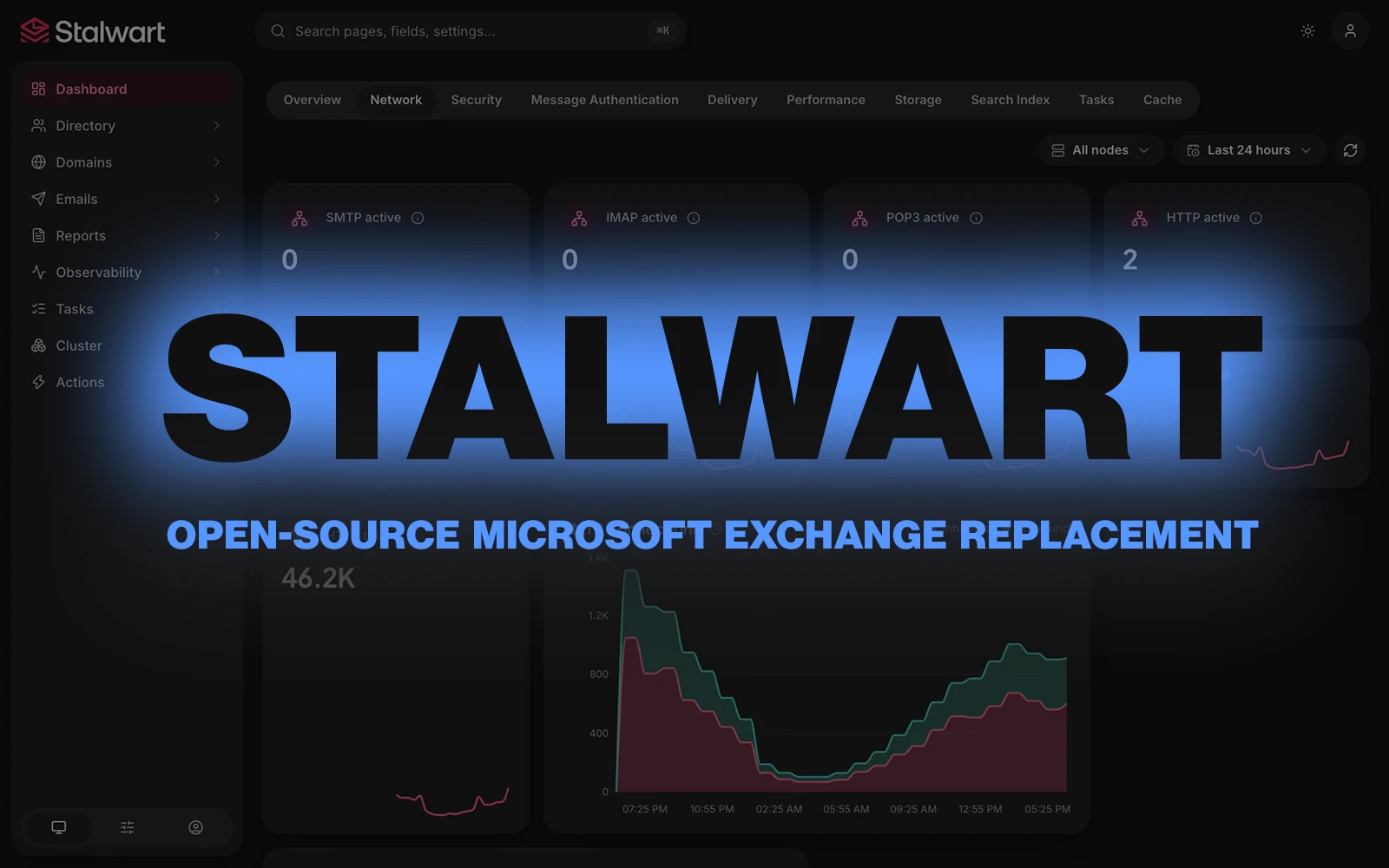
Stalwart, an open-source mail server, has launched version 1.2.0, which supports various protocols used by Exchange clients, allowing organizations to transition away from Microsoft Exchange while maintaining familiar functionalities.
Stalwart's new version 1.2.0 includes support for protocols like MAPI over HTTP, Exchange Web Services (EWS), Exchange ActiveSync, and Autodiscover. This enables compatibility with email clients such as Outlook and Apple Mail, allowing users to access their mail, calendars, contacts, tasks, and notes from a single account. The software is available as part of the free Community edition, licensed under the AGPL, providing a viable alternative for organizations still relying on Microsoft Exchange.
Organizations running Microsoft Exchange face a pressing issue as Exchange 2016 and 2019 reached their end of support in October 2025, with the Extended Security Update program reportedly ending in October 2026. This leaves users without critical updates or fixes. The Subscription Edition remains the only supported on-premises version, but it lacks cloud features. Consequently, administrators must choose between outdated servers and Microsoft's cloud, which raises concerns about data privacy under U.S. law.
Stalwart's maintainer noted that the primary barrier to leaving Microsoft Exchange has been the client software rather than the server itself. Transitioning to standard IMAP and CalDAV servers required users to switch email applications or operate Outlook in a limited IMAP mode, which hindered calendar and contact synchronization. The new version allows administrators to migrate mailboxes easily, redirect DNS to Stalwart, and enables users to continue using Outlook without interruption.
The technology behind Stalwart functions by allowing various clients to connect to the mail server using established protocols. Classic Outlook 2016 and later versions connect via MAPI and EWS, while Apple Mail and Outlook for Mac utilize EWS. Mobile devices, including iPhones and Android phones, can access the server through ActiveSync. This unified approach ensures that all client interactions are synchronized, and rules set in Outlook operate on the server side, maintaining functionality even when the client is closed.
Stalwart's implementation does not include features such as public folders, archive mailboxes, or mobile device management, which may limit its appeal for some users. Additionally, the new Outlook does not support self-hosted servers, including Exchange. Instead, it sends user credentials to Microsoft’s cloud to fetch emails, which could compromise data privacy for organizations seeking to self-host their email solutions. Stalwart advises users to disable the 'Try the new Outlook' option to avoid this issue.
The codebase for Stalwart has expanded by approximately 200,000 lines to include Exchange compatibility. This code is housed in separate crates and is disabled in official builds until an Exchange client connects. Stalwart provides an import tool named Vandelay, which facilitates the migration of mailboxes from on-premises Exchange and Microsoft 365.
Looking ahead, Stalwart views its integration with Exchange as a temporary solution, with EWS set to be discontinued in Exchange Online by April 2027. While classic Outlook is expected to remain supported until 2029, Stalwart encourages users to transition to email clients based on open standards like JMAP during this timeframe.
What it meansStalwart's version 1.2.0 provides an open-source alternative to Microsoft Exchange, facilitating easier migration for organizations facing end-of-support issues.
Ask your IT team this weekWhat is our plan for transitioning from Microsoft Exchange to an alternative solution?How are we ensuring data privacy if we use any cloud services?
DecisionThe IT team will assess the migration process to Stalwart, and security will verify its implementation.