Quantum position verification could lock remote hackers out, NIST shows
NIST researchers demonstrated a quantum position verification protocol that could prevent unauthorized access by confirming physical location.
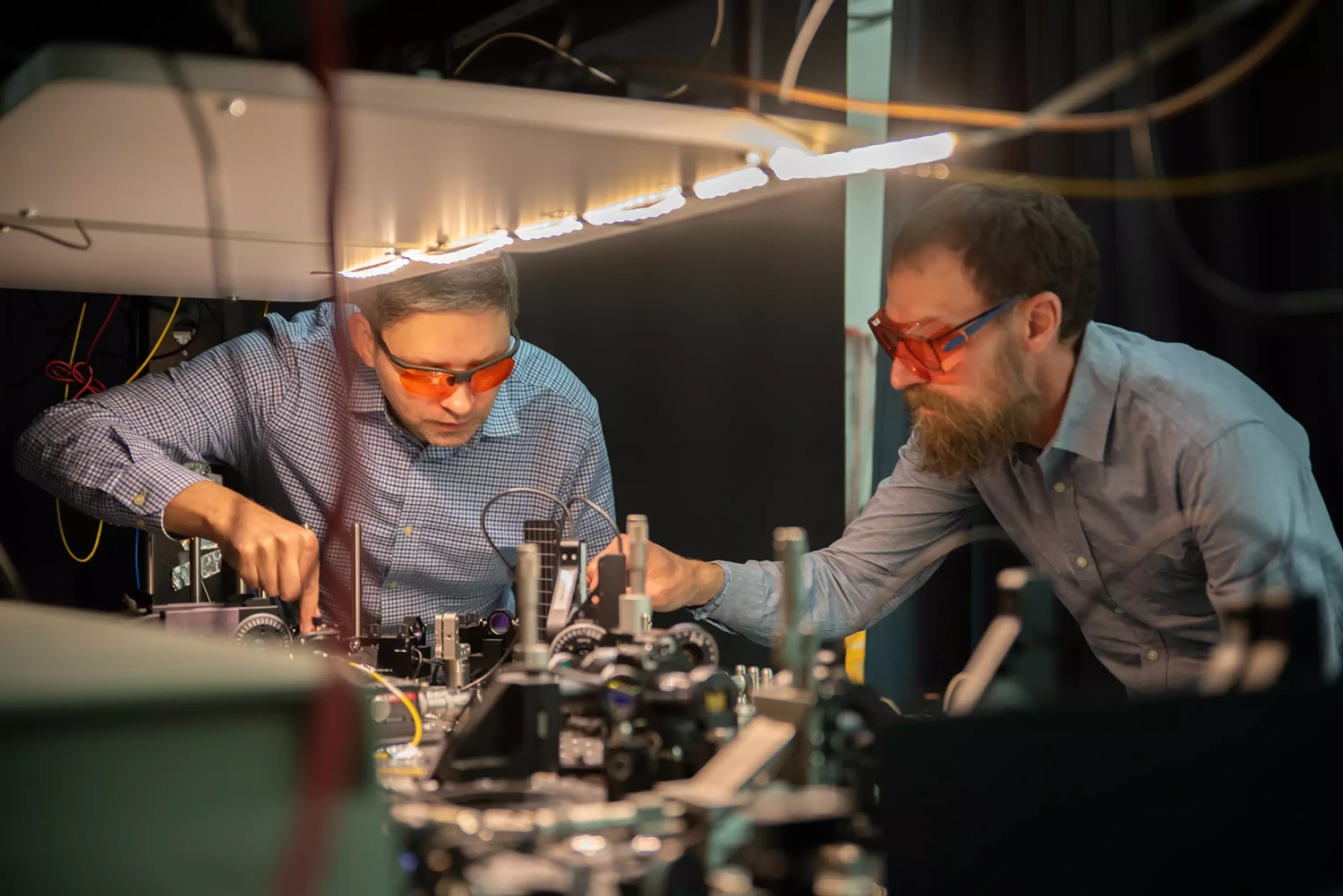
Researchers at the National Institute of Standards and Technology (NIST) have successfully implemented a quantum position verification protocol using entangled photons, which could potentially prevent remote hackers from gaining unauthorized access to secure systems by confirming a user's physical location.
The experiment conducted by NIST physicists involved a novel approach to quantum position verification, which confirms that a user is physically present at a specified location. This method could significantly enhance security for sensitive transactions, such as financial transfers, by requiring verification from within a secure environment. The researchers demonstrated the protocol inside a research facility in Boulder, Colorado, effectively closing loopholes that have previously allowed for cheating in quantum location systems.
The quantum position verification protocol operates using two trusted stations, known as verifiers, and a third participant, referred to as the prover, whose location is being questioned. The verifiers were positioned 195 meters apart and connected through electrical cables and optical fibers. The prover's claimed position was situated between these two verifiers. One verifier generates a pair of entangled photons, with one photon sent to the prover. Both verifiers then transmit random numbers simultaneously to the prover, which are used to determine how to measure the photon’s polarization.
In simple terms, quantum position verification leverages the principles of quantum mechanics to ensure that a user is in a specific location before granting access to a system. The process involves creating entangled particles, which are linked such that the state of one affects the state of the other, regardless of the distance separating them. This technology relies on the laws of physics, particularly the speed of light and the no-cloning theorem, to prevent unauthorized access by ensuring that only someone physically present in the designated area can provide the correct responses.
This method could impact various sectors that require secure access, including banking and data centers, where unauthorized remote access poses a significant risk. If successfully scaled, systems could deny critical commands, like large financial transactions, unless they originate from an approved physical location. NIST's research indicates that while the technology shows promise, practical applications are still over a decade away due to the ongoing development of high-fidelity quantum networks.
The experiment took place within a single building, and the researchers emphasized that a fully operational system would necessitate advanced quantum networks capable of sharing entangled photons effectively. The study utilized NIST’s superconducting nanowire single-photon detectors, which are crucial for accurately capturing the photons involved in the verification process. If too many photons are missed, even legitimate users may fail the verification test.
NIST physicist Scott Glancy noted that the results of the experiment demonstrate the potential for digital security to be anchored in physical reality. By requiring proof of physical presence, the system could thwart attempts by remote hackers to access secure environments. The researchers conducted millions of exchanges and performed a loophole-free Bell test to validate their findings, confirming the effectiveness of the quantum equipment used.
Despite the advancements made, several aspects of this technology remain uncertain. For instance, the scalability of the quantum position verification protocol and its integration into existing systems are still under exploration. Additionally, how this method will function in broader applications beyond controlled environments is yet to be fully understood.
What it meansNIST's quantum position verification could stop unauthorized access by confirming user location, enhancing security for sensitive transactions.
Ask your IT team this weekWhat systems do we have that require physical location verification?How can we integrate quantum technologies into our existing security framework?
DecisionThe IT team will assess the feasibility of implementing location-based security measures, and security will verify the evaluation.