New Attack Bypasses TPM Lockout to Crack Windows Hello and BitLocker PINs in Days, Not Years
A newly disclosed security flaw in Windows Hello warrants attention from all users.
A newly disclosed security flaw in Windows Hello warrants attention from all users.
The vulnerability requires local or already-authenticated access to exploit.
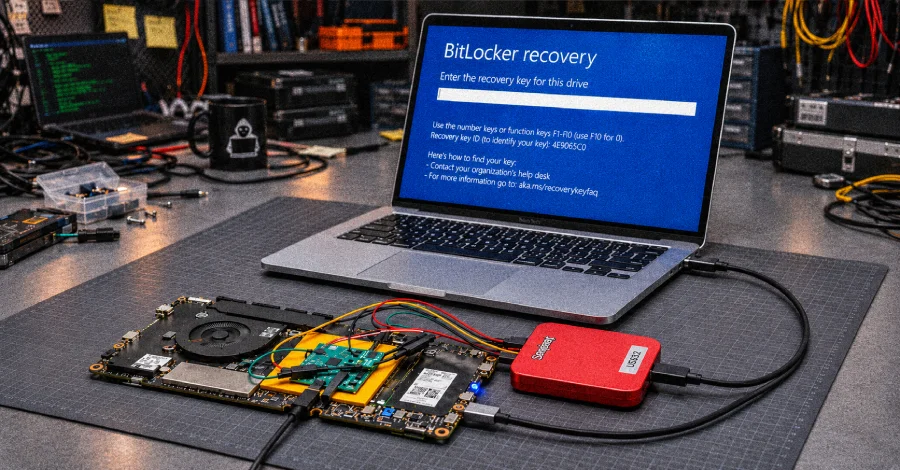
Researchers at Technische Universität Berlin report that on AMD-based PCs and some Intel PCs, the TPM lockout for Windows Hello and BitLocker PINs can be reset by anyone who opens the PC's case.
In laboratory tests, researchers successfully extracted a four-digit Hello PIN from an AMD laptop and a six-digit BitLocker PIN from an Intel laptop.
Both PINs were set by the researchers and discovered within 236 attempts.
AMD confirmed yesterday that its processor firmware contains a flaw that enables this attack on certain PCs with its chips.
Anyone using Windows Hello is at risk, particularly where Windows Hello is actively deployed rather than merely licensed or installed but unused.
A compromised Hello PIN can unlock device-tied keys, enable Hello-based single sign-on at work, and, in some configurations, bypass a multi-factor check.
The chipmaker's fix timeline spans from November to February 2027 for Ryzen, Ryzen AI, Ryzen Threadripper, Athlon, and EPYC chips, while one unnamed product lacks a specified date.
This vulnerability is tracked as CVE-2026-43613 and is classified as moderate severity, serving as the identifier for checking vendor guidance.
On an AMD PC, the owner can boot Linux, for instance from a live USB stick, and execute the command grep.
AMD has classified the flaw under CVE-2026-43613 and assigned it a CVSS score of 5.1 in a security bulletin released yesterday.
AMD plans to implement fixes for most affected chips between November and February 2027.
BitLocker's startup prompt imposes no limit, allowing each reset to provide a new set of 32 attempts.
These dates pertain to upcoming firmware updates, not to those already available for PCs.
Why it matters
The advisory outlines the real security implications for attackers once the vulnerable path is accessed.
Newer PCs attempt to mitigate this threat using counters within the flash chip, known as RPMC, which can only increase.
A small board placed between the processor and the flash chip can obstruct updates and falsely report success, leading the PC to accept the previous state.
What security teams should do
- Verify whether Windows Hello is present in your asset and software inventory.