PHP Fixes 7 Critical Flaws, Including Bugs That Could Allow Remote Code Execution
The PHP Foundation has released updates to fix seven critical vulnerabilities, including one that could enable remote code execution.
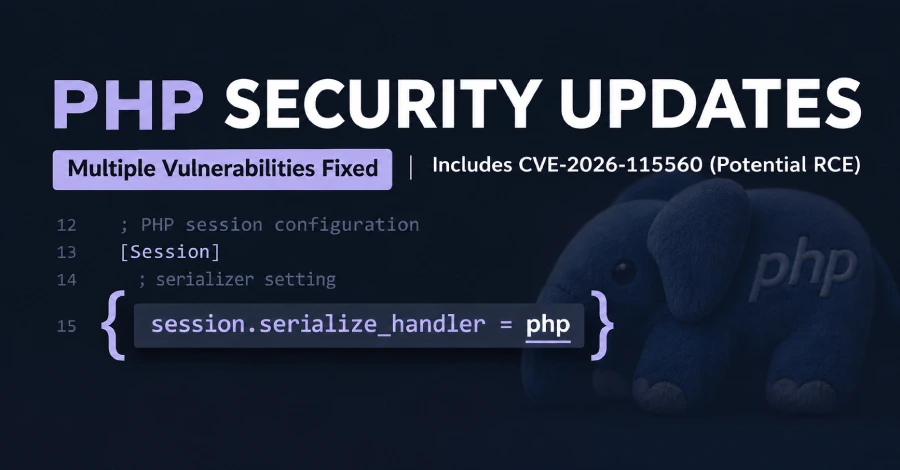
The PHP Foundation has issued security updates addressing multiple critical vulnerabilities that could be exploited for remote code execution on affected systems. The patch comes in response to an advance notice regarding the vulnerabilities affecting all supported PHP versions under certain conditions.
The PHP Foundation's latest security updates target seven critical security flaws, including CVE-2026-115560 and CVE-2026-126714, which could allow remote code execution if exploited. The updates are crucial for organizations running PHP, as these vulnerabilities can lead to severe consequences such as session corruption, denial-of-service, and local privilege escalation. The PHP Foundation emphasized that all supported versions of PHP are at risk under non-default configurations or uncommon setups, making it essential for users to apply the updates promptly.
The vulnerabilities work through various mechanisms. For instance, CVE-2026-126714, referred to as "phpAfterShell," allows attackers to run arbitrary code on servers by exploiting an interrupted file write process. When a pwrite() or ftruncate() operation is interrupted, PHP may create a malformed session file. This corrupted session can later be loaded by the session_start() function, leading to the execution of arbitrary code. The exploitation occurs when the session data is improperly mixed, allowing attackers to manipulate how PHP interprets the session data.
In general, remote code execution (RCE) vulnerabilities occur when an attacker can execute arbitrary code on a server or system without authorization. This can happen through various means, such as exploiting flaws in software that processes user input. Typically, RCE vulnerabilities are critical because they can allow attackers to take full control of affected systems, potentially leading to data breaches or service disruptions. In the case of PHP, session management is a common area where such vulnerabilities can arise, particularly when session data is not adequately validated or sanitized.
The vulnerabilities affect any application utilizing file-based sessions on supported PHP versions, including 8.2.x, 8.3.x, 8.4.x, and 8.5.x. Organizations using these versions must assess their systems for exposure to these flaws. The PHP Foundation has recommended immediate updates to the latest version for optimal protection against these vulnerabilities. If immediate patching is not feasible, they advise disabling session upload progress as a temporary mitigation measure.
The PHP Foundation released the security updates following an advance notice alerting users to the vulnerabilities. The exact timeline of when these vulnerabilities were discovered or reported is not detailed in the available information. However, the urgency of the updates indicates a proactive approach to securing the PHP environment, especially given the potential for severe exploitation.
The PHP Foundation has not disclosed the specific number of affected users or systems, nor has it provided detailed metrics on the potential impact of these vulnerabilities. As the situation evolves, organizations are encouraged to monitor for further updates from the PHP Foundation regarding these critical security issues.
Unknowns include the extent to which these vulnerabilities have been exploited in the wild, and whether any specific incidents have been linked to these flaws. Additionally, there is no information on whether any organizations have reported being impacted before the patch was released.
What security teams should do
- Update to the latest PHP version immediately.