Bazuka Android Malware Uses Fake Screen Overlays to Hide Credential Theft and Device Control
Cybersecurity researchers have disclosed details of a previously unknown Android malware framework called Bazuka that offers large language model (LLM) integration for victim management and control at scale.
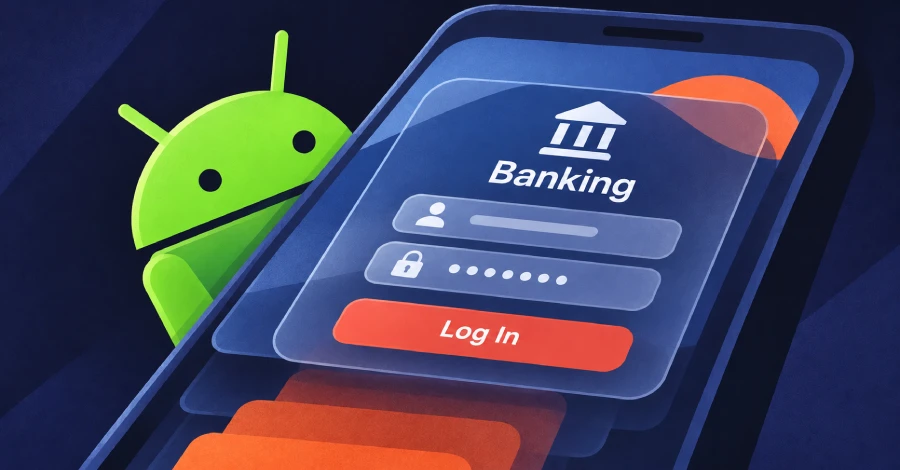
Cybersecurity researchers have disclosed details of a previously unknown Android malware framework called Bazuka that offers large language model (LLM) integration for victim management and control at scale.
Dutch mobile security company ThreatFabric said it discovered the threat in late October 2026 during an investigation into an NFC-relay banking Trojan.
Bazuka is a full malware framework, ThreatFabric said in a technical report.
One of the sample prompts provided by the author refers to a score, indicating an operator can likely request the AI model to score victims and determine how attractive they are as targets.
Two different variants of the Bazuka attack chain have been observed - It's suspected that the stager is the same as the downloader, whose main responsibility is to retrieve the core and supplementary modules necessary for a particular campaign, and then launch them.
However, the panel has been found to display UI elements in a mix of English and Russian.
Another perhaps not-so-surprising element is the use of artificial intelligence (AI) in the control panel to help operators identify victims of interest and manage infections.
The panel also supports the following capabilities - This indicates that the dropper apps can be distributed via at least two distribution channels: through traffers, who can use social media ads or bogus sites to trick users into downloading them, and Google Play Store.
One of the droppers containing the malware masquerades as a premium, adult-friendly version of TikTok (package name:).
The core module is the orchestrator, maintaining communication with C2, loading more DEX modules, dispatching commands, collecting device information, and managing permissions and component updates.
It is also equipped to launch a self-destruct mechanism that clears local storage, deletes the database, and disables the application completely.
An initial reconnaissance step is used to build a host profile, which then dictates the C2 server to dynamically select the relevant attack payloads to deploy.
Why it matters
One notable aspect of the malware that distinguishes it from the rest is a novel overlay technique that allows the trojan to take a screenshot of the home screen or lock screen, and display that as an overlay on demand to cover up malicious activities taking place in the background.
It supports both locally hosted models and models accessed through an API.