Hackers Trojanize Official Q-Dir and DesktopOK Downloads to Deliver Remote Access Malware
A supply chain attack has compromised the installation files of Q-Dir and DesktopOK, delivering remote access malware to users.
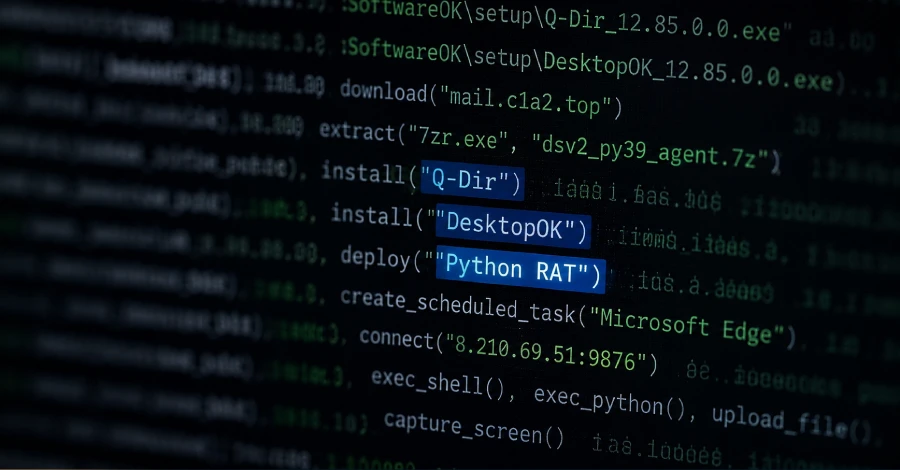
Cybersecurity researchers have detailed a supply chain attack that has altered the installation files for Q-Dir and DesktopOK, which are distributed via the official SoftwareOK website. This attack could allow unauthorized access to users' systems.
The attack affects users of Q-Dir, a file manager for Windows, and DesktopOK, a utility for managing desktop icon positions. According to AhnLab, a South Korean cybersecurity firm, the malicious modifications were evident both during direct downloads and when users updated previously installed versions of these programs. The changes made it difficult for users to detect malicious activity while running the software.
The attackers replaced the legitimate installation files with trojanized versions that deploy a Python-based remote access tool (RAT) from an external server. This RAT can execute shell commands, run Python scripts, transfer files, capture screenshots, and collect system information based on commands from the attacker. The modifications to the installer files include discrepancies in SHA-256 hashes and additional code that triggers further downloads and execution.
- 1Installation file tamperingAttackers replaced legitimate files with trojanized versions.
- 2Malware downloadsPython RAT downloaded from external server.
- 3RAT executionRAT executes commands and collects data.
- 4Communication with C2 serverRAT connects to command-and-control server.
- 5Persistence establishedScheduled task created to maintain RAT presence.
Remote access tools, or RATs, are a type of malware that allows an attacker to control a victim's computer remotely. They can be used to steal data, deploy additional malware, or manipulate files on the infected system. Typically, a RAT is installed without the user's knowledge, often bundled with legitimate software or delivered through phishing emails. Once installed, the RAT connects to a command-and-control server, allowing the attacker to issue commands and receive information from the infected machine.
Users of Q-Dir and DesktopOK are at risk if they have downloaded or updated these applications from the official site. AhnLab has confirmed that the attack has affected multiple versions of these programs, but the full scale of the compromise is still unclear. The exact method used to tamper with the installation files has not been determined.
While the attack's timeline is not explicitly detailed, it is clear that the malicious files have been available through the official SoftwareOK website. AhnLab has noted that the installation of the RAT occurs seamlessly, making it harder for users to notice any irregularities during the installation or update processes.
In response to the attack, AhnLab has advised users to verify the hash values of their downloaded files and to check their systems for any signs of RAT installation or execution. They caution that simply uninstalling and reinstalling the affected programs may not remove the RAT if it has already been installed. Users are encouraged to look for suspicious Python execution environments, scheduled tasks, and any unusual network activity.
What remains unknown is the specific vector through which the installation files were compromised. There is also no attribution to a known threat actor, although AhnLab has identified Chinese language comments in the source code, indicating a potential link to Chinese-speaking attackers. Security teams should monitor developments closely as further details emerge.
What security teams should do
- Verify the hash values of downloaded Q-Dir and DesktopOK files.
- Check systems for any traces of RAT installation or execution.
- Investigate for suspicious Python execution environments and scheduled tasks.
- Update antivirus engines to the latest version and perform a full system scan.
What it meansA supply chain attack has compromised legitimate software, potentially exposing users to remote access malware.
Ask your IT team this weekWhat measures do we have in place to verify the integrity of downloaded software?How frequently do we audit the software installed on our systems?
DecisionThe IT team will conduct a review of all recently installed or updated software, and security will verify that the review was completed.