Most Wanted: The Phishing Kits and Techniques Getting Past Security Controls
New phishing kits are bypassing security measures, with DOMDIFFER leading in breakthrough rates.
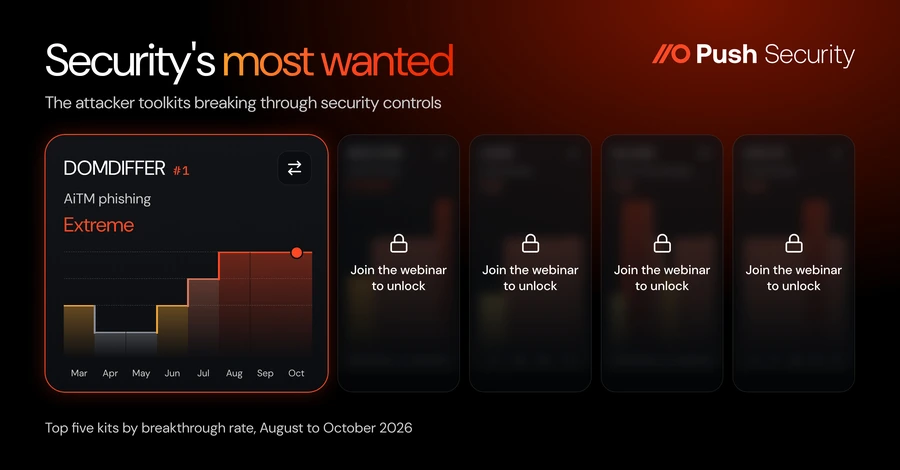
A recent analysis by Push Security highlights the emergence of phishing kits that are successfully bypassing security controls, with one kit, DOMDIFFER, demonstrating a significantly higher breakthrough rate than others. This has implications for organizations' defenses against phishing attacks.
Push Security has identified that certain phishing kits are managing to evade email security, web filtering, and safe browsing measures more effectively than others. This capability is measured by what the company calls the breakthrough rate, which reflects the proportion of phishing attacks that successfully reach users despite these defenses. Understanding which kits have high breakthrough rates is crucial for security teams, as it indicates where their existing controls may be lacking.
Every phishing attack begins with a lure to entice the user, and each security control only sees a portion of the attack. When a phishing page loads in a user's browser and the user interacts with it, that moment is classified as a breakthrough. This means that traditional metrics, such as low counts in email or proxy logs, do not necessarily indicate that a phishing kit is rare; it may simply be bypassing those controls undetected.
Phishing kits often utilize various techniques to successfully deceive users. One of the newest and most effective methods is DOM mirroring, which is employed by the DOMDIFFER kit. In this approach, the attacker’s browser performs the actual sign-in, sending the page's structure to the victim's browser, which then reconstructs a functional copy. This method allows the attacker to send legitimate browser signals to the target service and manage sign-in processes without additional coding, making it particularly stealthy.
Organizations are affected by these phishing kits in various ways, particularly those using Google and Microsoft accounts, as DOMDIFFER specifically targets these platforms. The kit has been consistently ranked as the top phishing tool in terms of breakthrough rate from August to October 2026. Its effectiveness lies not only in its technical sophistication but also in the tactics it uses to reach victims, often employing fake notifications to lure users into revealing sensitive information.
The timeline of DOMDIFFER's activity shows that it has been in circulation since February 2026, initially quieting down in spring before resurfacing in the summer. It has maintained a leading position in breakthrough rates since August, with most attacks using fake calendar event lures to engage potential victims. This sustained activity raises concerns about its widespread adoption among cybercriminals.
Push Security plans to further investigate these phishing kits in an upcoming webinar, scheduled for December 2. During this session, they will reveal the top five kits with the highest breakthrough rates, including a detailed analysis of DOMDIFFER. The company has indicated that they will explore how these kits operate under the hood and the strategies they employ to evade detection.
Unknowns remain regarding the full extent of the impact of these phishing kits and whether new defensive strategies can effectively counter their techniques.
What it meansPhishing kits like DOMDIFFER are increasingly bypassing security measures, making it essential for organizations to understand their methods and effectiveness.
Ask your IT team this weekWhich phishing kits are currently in use against our organization?How effective are our current email and web filtering controls?
DecisionThe IT team will review the effectiveness of existing phishing defenses and report findings to security.